
What size battery do you need for load shedding?
A practical way to estimate usable battery capacity for lights, internet, refrigeration and other essential South African household loads.
VumaTech editorial team · 8 October 2026
The short answer
Add the watts of the appliances you want to keep on, multiply by the expected outage hours, then allow for inverter losses and the battery’s usable depth of discharge. A professional design must also check peak power, motor surges and the battery manufacturer’s discharge limits.
Separate power from energy
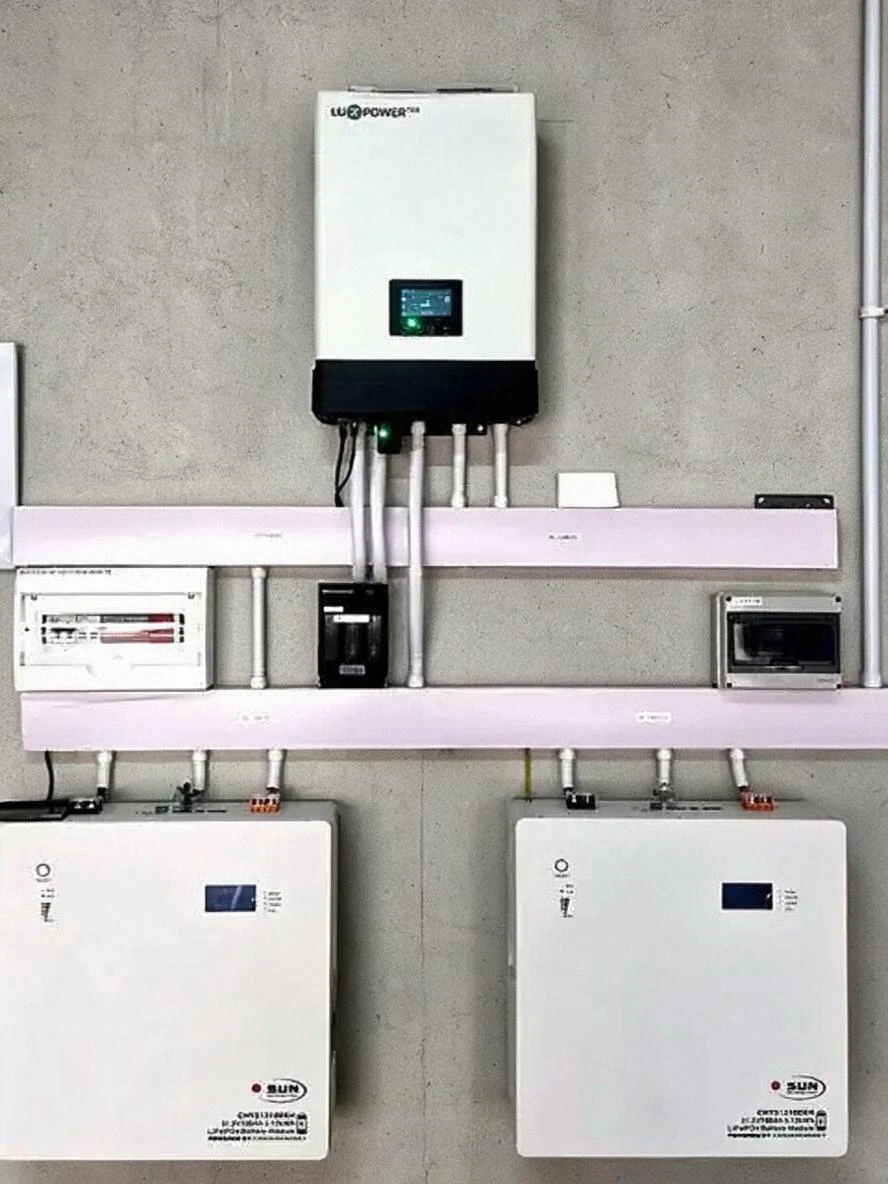
The inverter must supply the combined instantaneous load, measured in kW. The battery must sustain that load over time, measured in kWh. A large battery cannot make an undersized inverter run a kettle and pump together, and a large inverter does not guarantee long runtime.
Estimate your essential-load energy
Use each appliance’s rated watts as a starting point and estimate how long it will operate. A refrigerator cycles, while Wi-Fi and security equipment may run continuously. Treat geysers, ovens and resistance heaters separately because they can dominate consumption.
- Multiply watts by hours, then divide by 1,000 to get kWh
- Add the appliance results together
- Add a reasonable allowance for conversion losses
- Keep reserve capacity for battery health and longer-than-expected outages
Why the battery label is not your runtime
Nominal capacity is not always fully usable. Battery management settings, minimum state of charge, temperature, age and discharge rate affect delivered energy. Compare usable kWh and warranty terms—not only the number printed on the enclosure.
Design for recovery as well as discharge
A battery system must recharge before the next interruption. Solar availability, grid charging limits and repeated outage blocks all matter. In winter or poor weather, a system designed only around one ideal cycle can fall behind.
Questions people ask
Will a 5 kWh battery run a house all night?
It depends on usable capacity and the loads. Efficient essentials may last several hours, while a geyser, oven or heater can consume that energy quickly.
Should I put my geyser on backup?
Usually it is better to control or schedule a conventional geyser separately unless the inverter, battery and solar array were deliberately designed for that high load.
Can I add another battery later?
Often yes, but compatibility, battery age, firmware, cabling and manufacturer rules matter. Plan expansion before installation rather than assuming any battery can be added later.